


An atmosphere of feeling of anticipation. Visible is the cold breath emanating from my rivals as they do the "starting line" jiggle on the beginning point.
A rapid twitch of the hips.
I'm lined up for my local 5km community parkrun and I'm focused. Three, two, one...
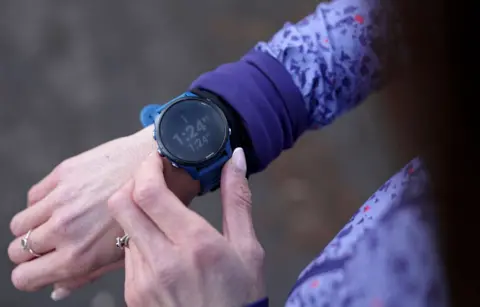
Hold on. I must adjust my watch. As does the runner alongside me.
The person in the line expresses impatience. I refuse to go until… done! Signal acquired, away I go.
In the mele, it's hard to find a wrist without a wearable on it. And this isn't only us participants who use them.
We're witnessing a booming, multi-billion dollar sector. Companies like Samsung Galaxy dominate, featuring an extensive selection of various devices to fit a range of budgets. According to how high tech the device you go for, costs can range from an affordable sum to a small fortune.
"It drives me insane, I'm unable to stop checking."
"It reassures me… It's like a companion supporting me."
"Please don't notify me I've had a restless night."
Just some of the responses I've had from like-minded device users when I question what they feel about theirs.
The Data Dilemma
My thoughts on mine? Currently, annoying. It's telling me my speed is wrong, making me wonder whether the foliage I'm passing under are blocking my GPS connection.
Millions of us fasten these small monitors onto our wrists and keep them on constantly, apparently at ease with the fact they're perpetually recording us.
Gone are the days when we relied on them exclusively to give us an rough count of our pedometer reading. Today, they can analyse our nightly rest, blood pressure, heart rate variability (HRV), our body battery.
It's difficult to find a bodily function they aren't designed to measure.
But can they do what they claim to do? And are the data points we analyse a true reflection of the truth? Do they enhance our daily wellness, or do the multitude of measurements and motivational messages just increase our sense of overwhelm?

A Complicated Bond
"I find myself getting a bit fixated with mine," an individual confesses.
While she appreciates how her device tracks her runs, she finds some of its other functions "daunting" at times - a feeling first discovered during a pregnancy.
Before she realised she could adjust the settings, her smartwatch kept telling her she was not being active enough. Now, the watch frequently reports her she's had a bad night's sleep.
"I have a six-month old, it's unnecessary for me to be notified I've not slept," she says. "I'm acutely aware only too well."
Is it not possible to just stop wearing it?
"I suppose I could, theoretically, but I've got this love-hate relationship with it," she continues. "I value it for its exercise data, but I'm unsure whether all the other things it can now do is maybe overkill for me."
Inside the Device
Every device of smartwatch has its own unique way of monitoring your bodily functions and interpreting your data, but the majority use sensors on the back of the watch.
They commonly emit tiny, coloured LED lights onto your skin which can monitor pulsation, detecting your pulse rate. More advanced devices analyse changes in the electrical current that passes over the skin to get an idea of your recovery state.
The Professional Viewpoint
A data scientist says that overall for smartwatches, it's a "delicate equilibrium" - while the continuously improving tech could realistically prevent illness, "spotting abnormalities before we notice anything", it could also turn us device users into the "anxious healthy".
He points out that some of the latest wearables can conduct tests like medical-grade monitoring, which constantly monitor how stable the heart is. They can alert if someone is experiencing an irregular rhythm, where there is irregular electrical activity in the heart causing an arrhythmia.
This does not automatically signal someone is on the verge of a cardiac event, but it can give an early warning they might be more at risk of a heart problem in the future.
But how to interpret these readings is not straightforward. The expert fears that as further capabilities are incorporated, people may not be able to fully understand their data.
"I remain sceptical that the ability to monitor so many things is such a beneficial thing," he says.
A clinical psychologist specialising in wearable tech echoes this sentiment. Her work into the effect of wearable tech on a specific group of cardiovascular patients suggested a noticeable percentage of those who were given devices to monitor their condition experienced heightened worry and were "had a higher tendency to use doctor's time".
She noted a vicious circle with her patients - they spotted a concerning reading on their watch. They became worried. Their pulse increased. They got even more concerned. They looked a second time, and their heart rate went up again.
"Upon viewing stats about ourselves that we can't properly interpret then, understandably, we are going to seek clarification," the psychologist says. "We check, we check again - it becomes a feedback loop."


